
NCERT or Reference Books for Class 9 and 10? What to Use and When
GyanSanchar · 1 Nov 2026
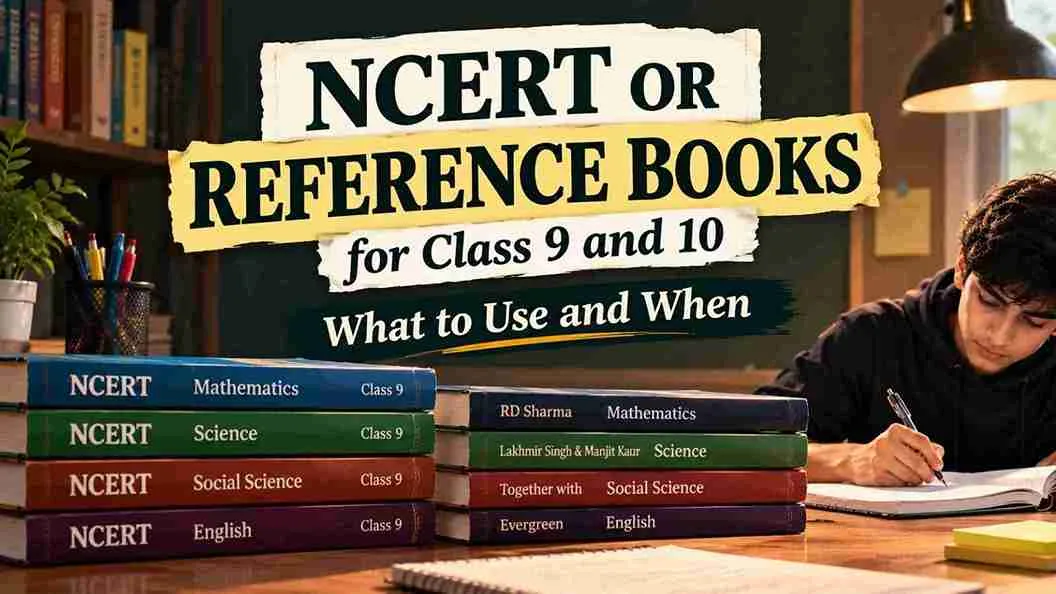
Walk into a bookshop and you will see shelves of guides and reference books for Class 9 and 10. Many students buy several, finish none and still skip the textbook. Here is a better way to choose.
For CBSE students: NCERT first
CBSE board papers, and the later competitive exams, are based on NCERT. So:
Read and understand every NCERT chapter.
Solve every example and exercise question.
Move to the NCERT Exemplar for higher-level problems.
Only then add one reference book for extra practice.
For ICSE students: the school textbook and CISCE papers
ICSE schools choose their own textbooks, such as Selina or ML Aggarwal. Use these as the base, and add the CISCE specimen paper and previous years' papers. For Science, remember that NCERT is also useful for clearer, shorter explanations, especially if you plan for NEET or JEE later.
When a reference book helps
You have finished the textbook and want more practice.
You are aiming for Olympiads or a competitive exam.
Your weak chapters need more varied questions.
A simple rule: one textbook, one practice book, one set of papers
Finishing a small number of books fully is far better than starting many. Choose one practice book per subject and complete it, along with previous years' papers.
How to use a book well
Do not read a solution before you have tried the question for 10 minutes.
Mark the questions you got wrong and do them again after a week.
Keep notes of formulas and tricks you learn.
Do not forget the school's notes
Your teachers know the board's style and the school's tests. Take their notes and class work seriously.
Gyan Sanchar teaches students from Class 6 to 12, with foundation and board-exam preparation for Class 6 to 10. See our foundation courses, try the free EQ test or book a free demo class.