
What Is Emotional Intelligence (EQ) and Why It Matters for Students
GyanSanchar · 25 Oct 2026
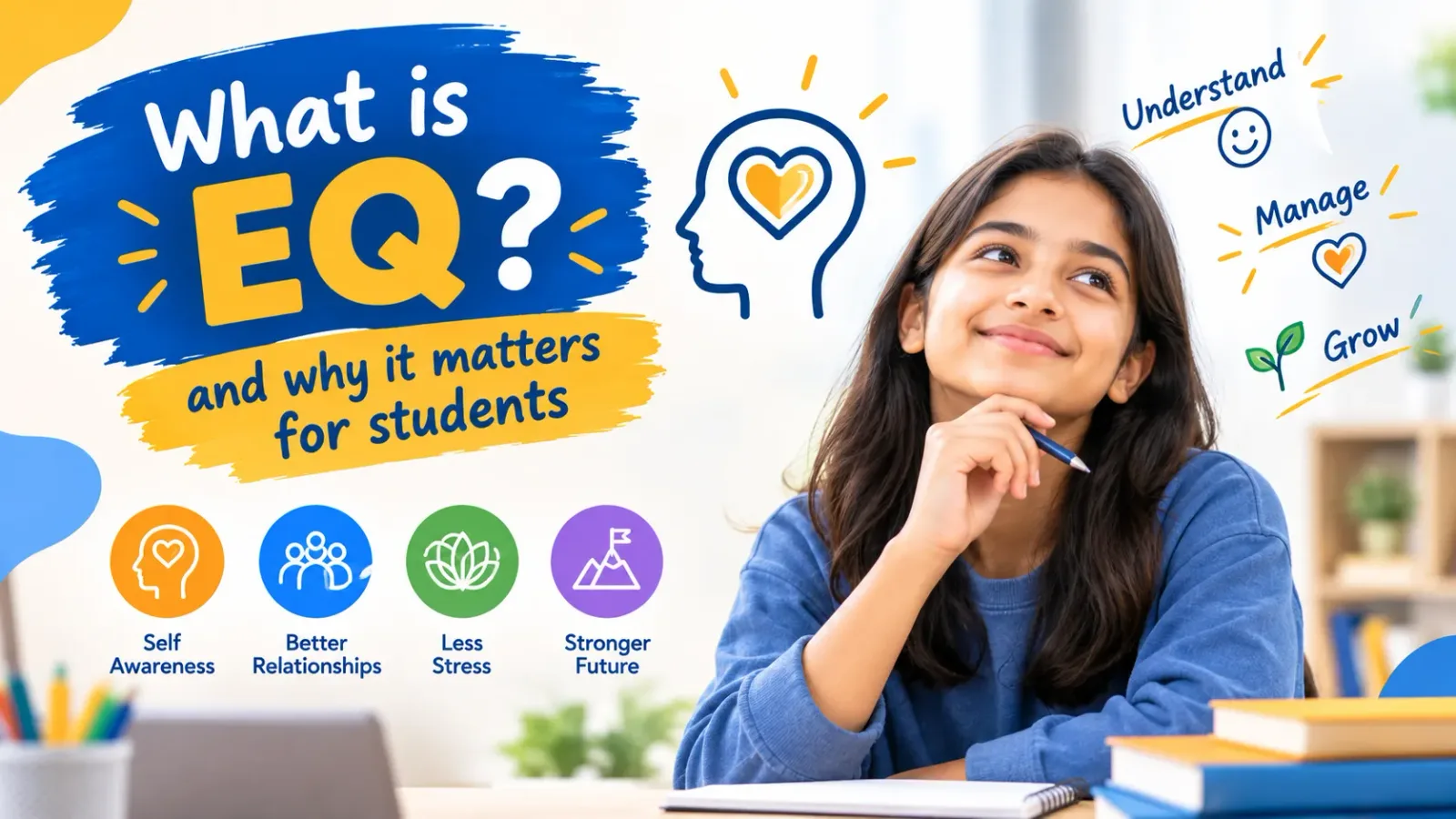
Students with similar marks often have very different experiences of exam preparation. One stays calm through a bad test and bounces back. Another feels crushed for weeks. A large part of this difference is emotional intelligence, usually called EQ.
What is EQ?
EQ is the ability to understand your own feelings, manage them, stay motivated and get along well with others. It is a skill, which means it can be practiced and improved at any age.
The five parts of EQ
1. Self-awareness
Knowing what you feel and why. A student with this skill can say, "I am nervous because the test is tomorrow", instead of just feeling restless.
2. Self-regulation
Staying in control when things get hard: pausing before reacting, calming down after a bad result, and not letting a mistake spoil the rest of the paper.
3. Motivation and grit
Keeping going when progress is slow. Grit is what makes a student sit down for the next chapter after a low score.
4. Empathy
Understanding how other people feel. It makes group study, teamwork and family life smoother.
5. Social skills
Communicating clearly, asking for help and working with others, including teachers and mentors.
Why it matters in exam years
It reduces the damage of stress and comparison.
It helps students ask for help instead of hiding a problem.
It keeps motivation steady across a long preparation.
Simple ways to build EQ
Name the feeling. Writing "I feel anxious about Chemistry" is the first step to managing it.
Take three slow breaths before a test or when you feel overwhelmed.
After a bad result, write one thing you learned and one thing to try next.
Talk about your day with a parent, teacher or mentor.
Try our free EQ test
Gyan Sanchar offers a free EQ test for students of Class 6 to 12. It takes only a few minutes and gives a personal report with your strengths, a focus area and an action plan. It is a self-reflection tool, not a clinical assessment. Log in, take the test and share the report with a parent or mentor.